pea

Practice
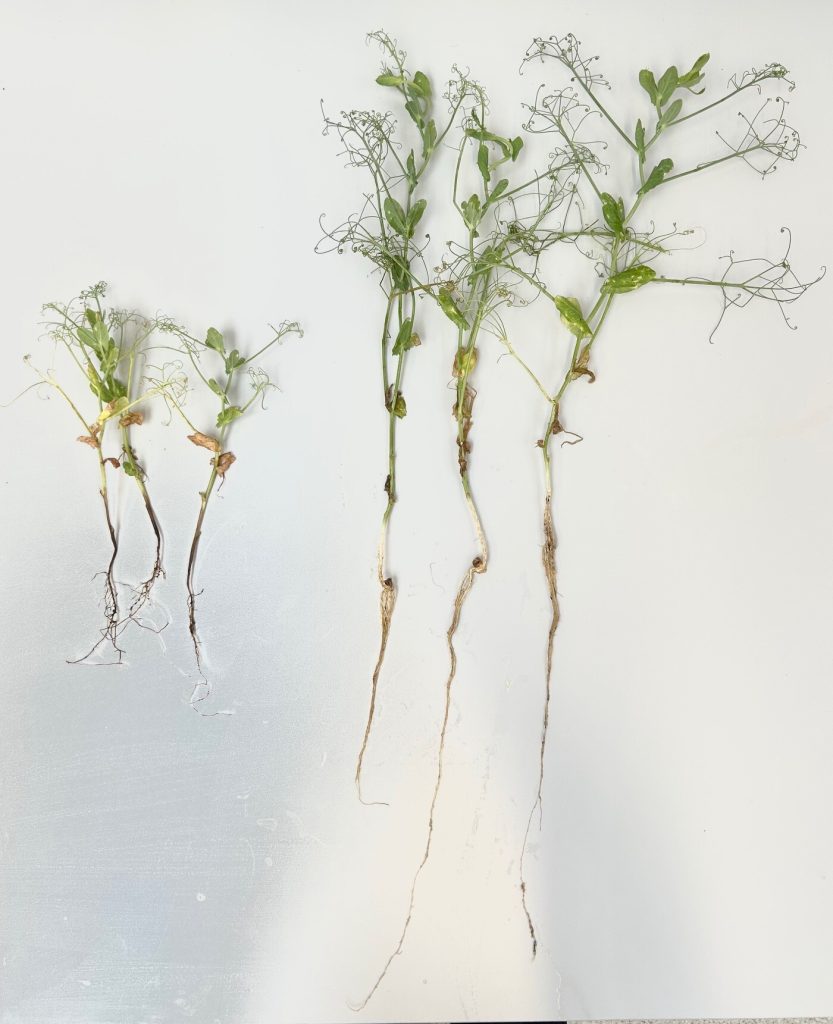
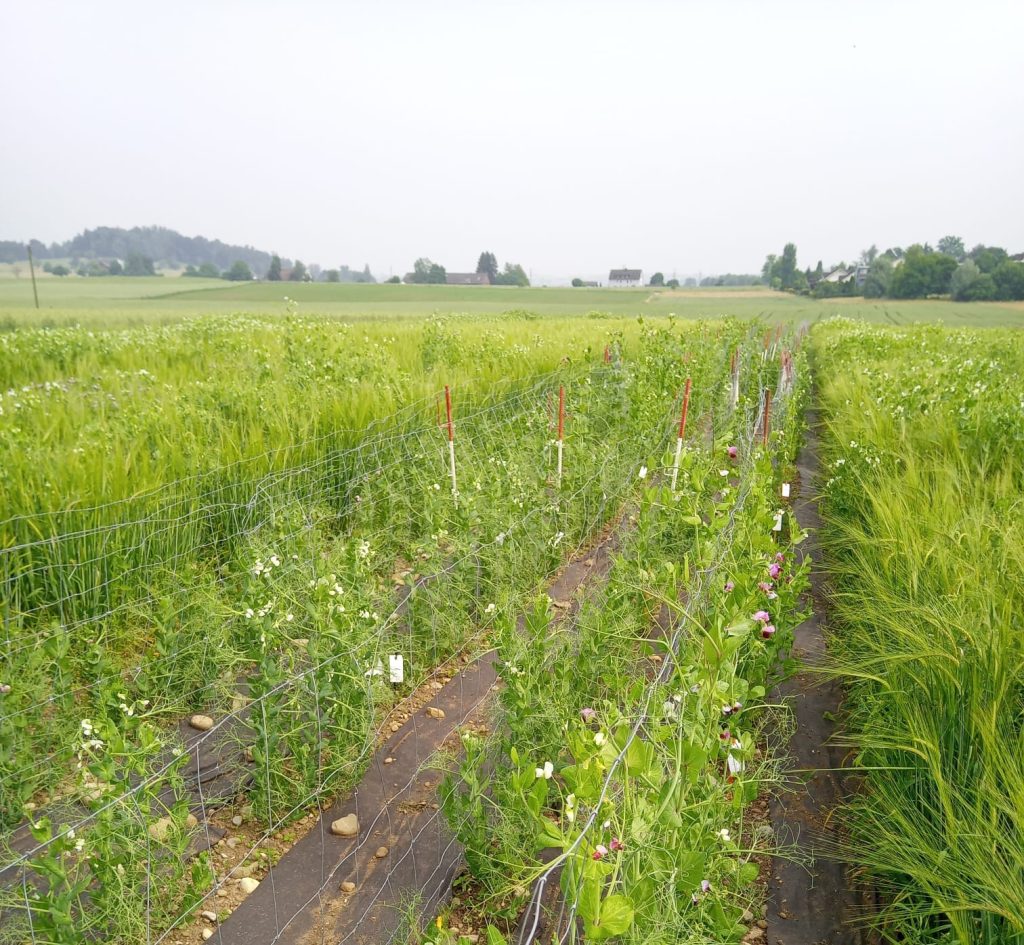
16 – Screening Crop Wild Relatives of Pea under field conditions – Improving on-field phenotyping of Pea-CWR with a fence-based system

16 – Screening Crop Wild Relatives of Pea under field conditions – Improving on-field phenotyping of Pea-CWR with a fence-based system

Reliable phenotyping of pea crop wild relatives (CWRs) and breeding progeny is essential for effective selection in plant breeding, but field conditions often limit the assessment of individual plants. The COUSIN Project presents a fence-supported field screening system that improves the evaluation of pea genotypes under realistic growing conditions, enabling more precise selection for plant architecture, health and agronomic performance.
Practice
15 – How genomics can help to unlock wild genetic potential for crop improvment

15 – How genomics can help to unlock wild genetic potential for crop improvment

Modern crops have lost valuable genetic diversity through domestication, while crop wild relatives (CWRs) retain traits important for resilience and adaptation. The COUSIN Project provides high-quality genomic resources and maps for multiple CWR species, enabling the identification of beneficial genes and supporting their targeted introgression into modern crops to accelerate breeding for improved performance and resistance.

Practice
14 – Using Crop Wild Relatives in innovative food products – Translating crop diversity into practical food application

14 – Using Crop Wild Relatives in innovative food products – Translating crop diversity into practical food application

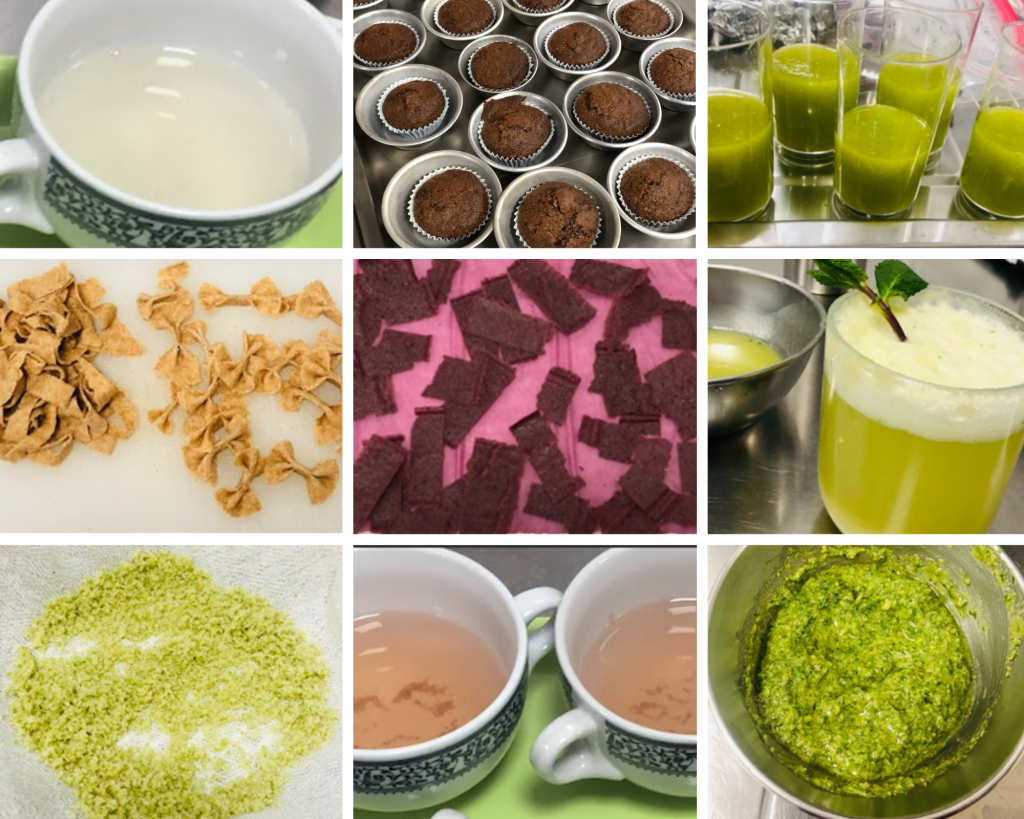
Crop wild relatives (CWRs) and CWR-derived materials from barley, wheat, pea and lettuce offer underused potential for innovative food product development. The COUSIN Project demonstrates how these resources can be incorporated into a range of food applications, supporting the creation of more diverse, nutritious and sustainable food systems.

Practice
12 – Testing soil for the presence of Aphanomyces euteiches – A. euteiches is the causal agent of Aphanomyces root rot in peas

12 – Testing soil for the presence of Aphanomyces euteiches – A. euteiches is the causal agent of Aphanomyces root rot in peas

This practice presents a protocol for testing soil for the presence of Aphanomyces euteiches, the causal agent of pea root rot. The COUSIN Project provides practical guidance on disease risk assessment using a soil bioassay, supporting field selection, crop management, and the evaluation of pea crop wild relatives for improved resistance to root rot.

PublicationsScientific Publications
Genome-wide association studies of a pea germplasm reveal novel markers and candidate genes implicated in resistance to Fusarium oxysporum f. sp. pisi races 1 and 2

Genome-wide association studies of a pea germplasm reveal novel markers and candidate genes implicated in resistance to Fusarium oxysporum f. sp. pisi races 1 and 2

On May 2026, the scientific journal  "The Plant Genome" published an article written by Osman Zakaria Wohor, Diego Rubiales, Nicolas Rispail entitled "Genome-wide association studies of a pea germplasm reveal novel markers and candidate genes implicated in resistance...

newsPublicationsScientific Publications
Development of Advanced Pea Breeding Lines with Improved Resistance to Ascochyta Blight

Development of Advanced Pea Breeding Lines with Improved Resistance to Ascochyta Blight

On March 25th, the scientific journal  Agriculture published an article written by Manuel Alejandro Jiménez-Vaquero, María José Cobos, Carmen María Ruiz-Pastor, and Diego Rubiales entitled "Development of Advanced Pea Breeding Lines with Improved Resistance to...

newsPublicationsScientific Publications
Identification of genomic regions associated with partialresistance to Aphanomyces root rot in pea

Identification of genomic regions associated with partialresistance to Aphanomyces root rot in pea

On December 1th, the scientific journal The plant genome (volume 18, issue 4) published an article written by Sara Rodriguez-Mena, Maria Carlota Vaz Patto, Susana Trindade Leitão, Diego Rubiales, and Mario González entitled “Identification of...