
Southern Italy, particularly Sicily, harbors significant agrobiodiversity within Brassica oleracea L. crops (broccoli, cabbage, cauliflower, kale, kohlrabi, etc.). This diversity stems in part from the widespread presence of wild Brassica oleracea complex species (BOCS, n=9), which have naturally hybridized with cultivated varieties over time, producing diverse morphotypes, some of which have been stabilized through selective breeding by local farmers.
Recent studies have explored the origins and domestication processes of cole crops such as broccoli, cauliflower, and kale. Evidence suggests gene flow between Calabrian and Sicilian kale landraces and wild Brassica rupestris populations, which are geographically proximate. Additionally, wild Brassica oleracea populations along the European Atlantic coasts have been identified as feral types – escaped cultivated plants that have undergone natural adaptation.
As part of the COUSIN project, we continue to monitor and characterize the morphological and biochemical traits of wild Brassica oleracea complex species (BOCS) populations across Sicily, including Brassica rupestris Raf., Brassica villosa Biv., Brassica drepanensis (Caruel) Dam., Brassica insularis Moris and Brassica incana Ten.
A key focus is the establishment of a genetic reserve in the Egadi Islands, home to Brassica macrocarpa Guss., an endemic species regarded as one of the most ancient and genetically distinct members of the BOCS group. We are collaborating with stakeholders to ensure the establishment and long-term viability of this genetic reserve.
During recent fieldwork, we collected the rhizosphere samples of five Sicilian BOCS populations (B. macrocarpa from Favignana, B. drepanensis from Erice, B. incana from Patti, B. rupestris from Sambuca di Sicilia, and B. villosa from Caltabellotta) to analyze the in situ soil microbiomes and to compare them with the on-farm soil microbiome of cole crops.
The Critical Case of Brassica trichocarpa
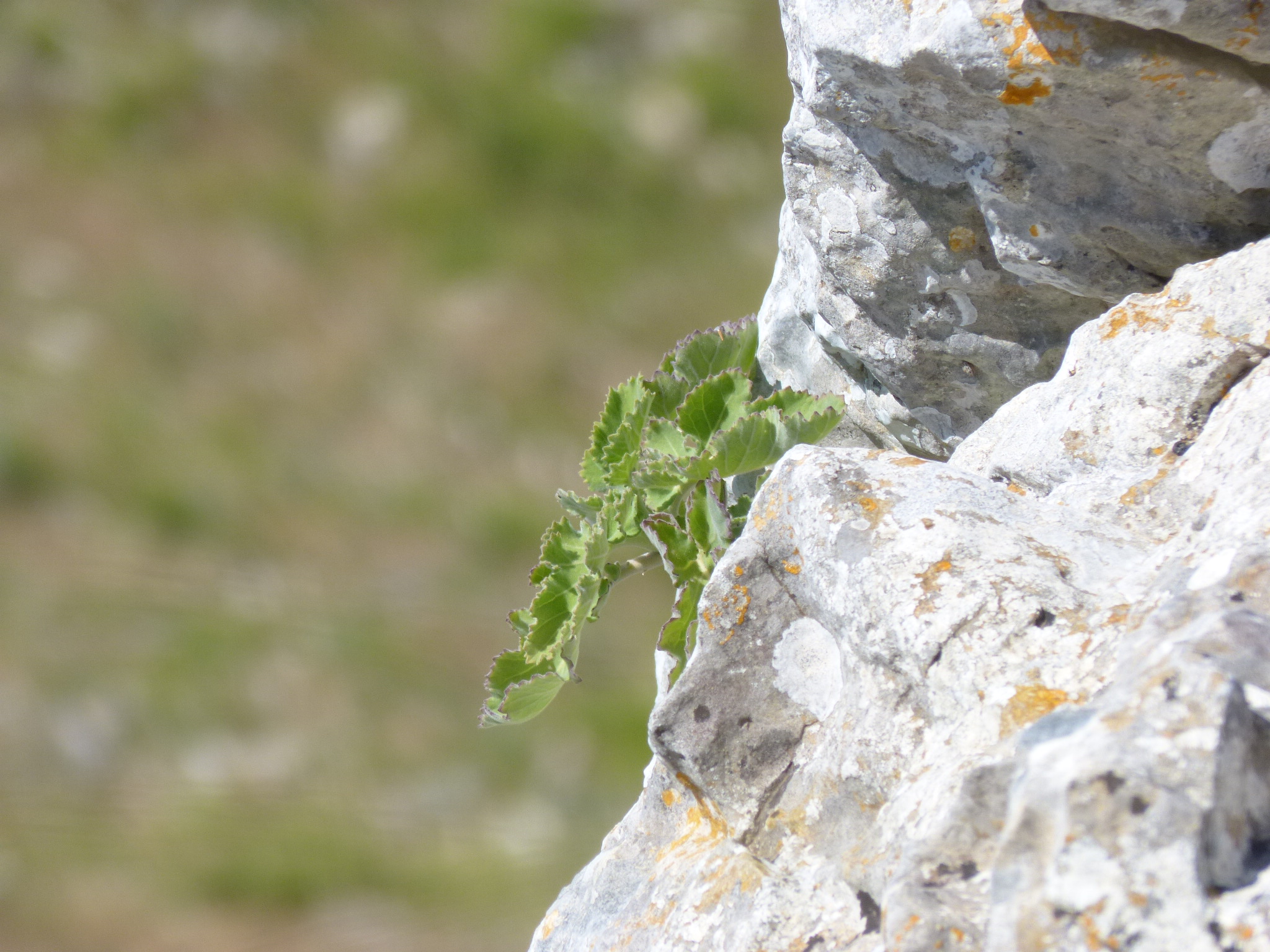
Our research has also prioritized Brassica trichocarpa C. Brullo, Brullo, Giusso & Ilardi, a recently described (2012) and extremely rare Sicilian endemic. This small perennial grows exclusively on a limestone ridge near Monte Cuccio (Palermo) at ~950 m elevation. Key traits are the flowering period in May-early June and the seed production in late June-July. The chromosome number is likely 2n=18 (unconfirmed). The germination rate was 60% after 10 days in dark conditions at 25°C. The habitat is limited to <0.005 km2 in a dry grassland dominated by Ampelodesmos mauritanicus.
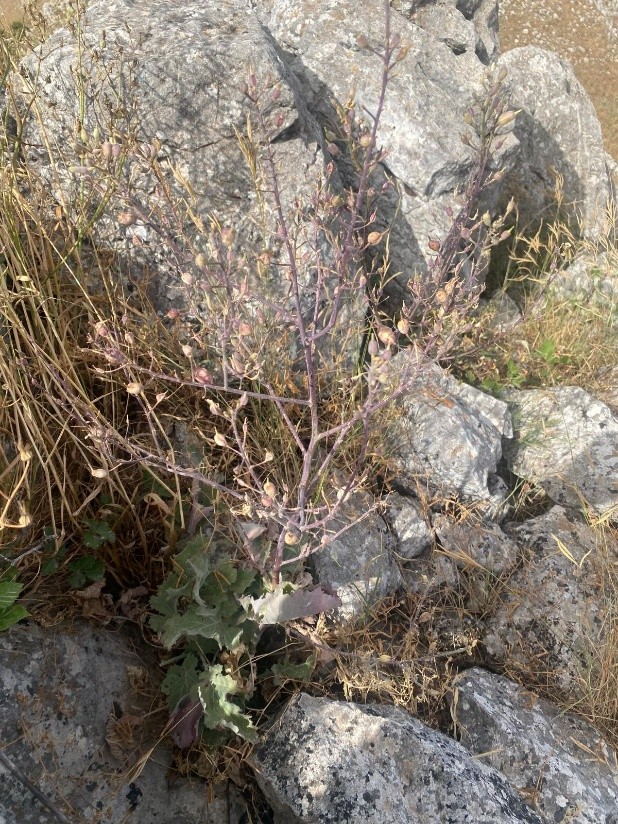
During June 2024 field surveys, we observed only a single flowering individual and a few vegetative plants, confirming the species’ critically fragile population status. While B. trichocarpa appears to be primarily insect-pollinated, preliminary evidence suggests partial self-sterility, limiting its ability to reproduce. Seed dispersal appears highly localized, with most propagules remaining near the mother plant, though detailed studies of its reproductive ecology are still lacking. The species faces acute anthropogenic threats, including summer cattle grazing (exacerbated by frequent fence damage) and recurrent human-induced fires that destroy juvenile plants before seed set. These compounding pressures have driven the observed population collapse. Current data unequivocally classify B. trichocarpa as Critically Endangered, with its entire population confined to a mere 0.005 km² and only one mature individual surviving in the wild in 2024. This alarming situation meets IUCN criteria for an extremely high extinction risk within the next decade.
The species’ precarious status represents a dramatic decline from its 2018 “Near Threatened” classification, with plummeting population numbers and dangerously low genetic diversity now threatening its long-term survival.
Yet cautious optimism remains warranted. Our 2025 surveys revealed five reproductive plants – a potentially significant development following the solitary flowering individual observed in 2024. This fragile recovery signal suggests some residual resilience in the population.
More than just a botanical rarity, Brassica trichocarpa has become a living symbol of the urgent need for immediate conservation action to prevent irreversible loss of the region’s unique genetic heritage.
Ferdinando Branca¹, Donata Arena¹, Gresheen Garcia¹, Luca Ciccarello¹, Nicolas Al Achkar¹, Lorenzo Maggioni²
¹ Department of Agriculture, Food and Environment (Di3A), University of Catania, Italy
² European Cooperative Programme for Plant Genetic Resources, Rome, Italy
.
0 Comments