
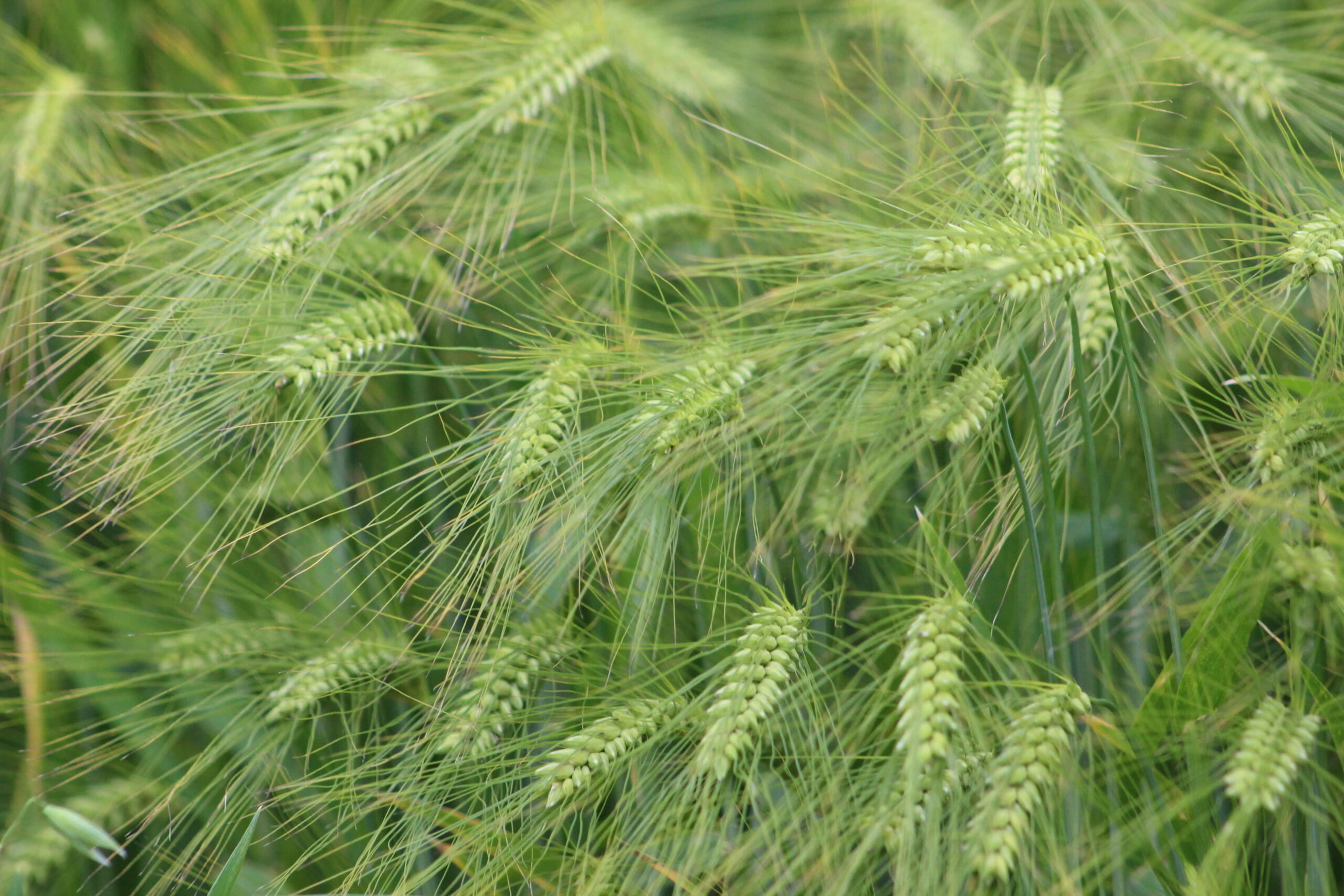
Barley (Hordeum vulgare ssp. vulgare) is the fourth most widely grown cereal in the world used mainly for animal feed and the production of malt for beer and whisky production, though it is also a staple food crop for human consumption in some parts of the world. Barley was one of the earliest crops domesticated over 10,000 years ago from its wild relative Hordeum vulgare ssp. spontaneum which is a grass native across a wide region of Eurasia.
Although cultivated barley exhibits a considerable amount of variation, recent genomic studies have shown that its wild relative harbours much more genetic variation that the process of domestication never captured. The COUSIN project is exploring the utility of this untapped CWR genetic variation through a co-ordinated range of work between partner organisations. Most of these studies are not of the CWR itself as some of its traits make it very difficult to assess agronomically, in particular, the shattering of the ear of wild barley on maturity that scatters the grain before it can be harvested. Therefore, much of the work in COUSIN is based on crosses between different CWR accessions and cultivated barley to assess the benefits of the CWR variation.
At JHI crosses have been made with different CWR accessions, the progeny selected for non-shattering and other desired traits and over a thousand derived lines are now being assessed in the field. These are showing a considerable range of variation for agronomic traits and studies are now indicating variation in root traits where utilisation of CWR in cultivated barley could have a major impact in adaptation to environmental stress. New crosses have been undertaken by ATK and JHI to extend and validate this work. The barley work at FIBL is taking advantage of more advanced material, in particular populations derived from a cross between CWR and a cultivated barley that have subsequently been grown on conventional or organic systems for multiple generations. The resulting mirrored populations show differences that potentially relate to adaptation to the two different agronomic systems. This is being assessed genetically and the study extended in COUSIN through the growing of these twinned populations at partner sites to assess how the populations change when they grow in different environments. In addition, the CWR accession used in the original crosses is being sequenced at CRAG to help understand exactly which CWR genes underpin the adaptation shown in these populations. Finally, RSR is testing the utility of barley material that includes CWR ancestry at a larger scale through interaction with end-users helping to ensure that COUSIN provides evidence, at a range of levels, of the benefits that CWR in barley can bring for the future.
0 Comments